
Japanese craftsmanship, Scottish heritage and an unforgettable experience competing alongside some of Europe's finest sushi chefs.
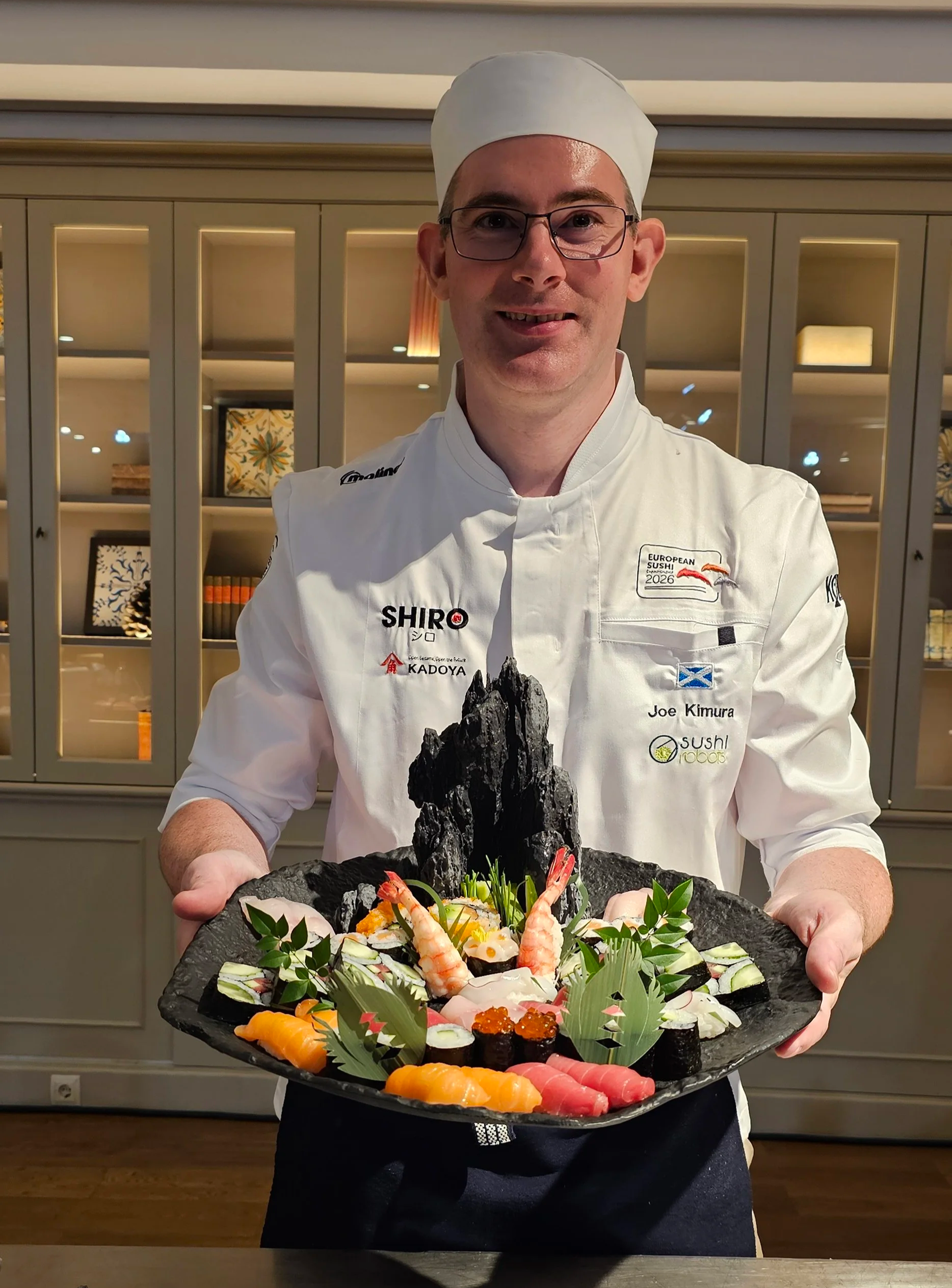
On 29 October 2026, I had the honour of representing Scotland at the European Sushi Championship, held at the beautiful Masia Rosàs in Sant Cugat del Vallès, just outside Barcelona.
It was a particularly special occasion, as I became the first chef to represent Scotland, and indeed Britain, in the championship's history.
Having spent much of my professional career dedicated to Japanese cuisine, including working in restaurants such as Nobu, Roka and Hakkasan, training in Japan and participating in international culinary competitions, this was another opportunity to challenge myself and demonstrate my skills on an international stage.
The championship brought together talented sushi chefs from across Europe, each with their own approach, techniques and culinary backgrounds. The standard was exceptionally high, making it both a demanding competition and a rewarding experience.
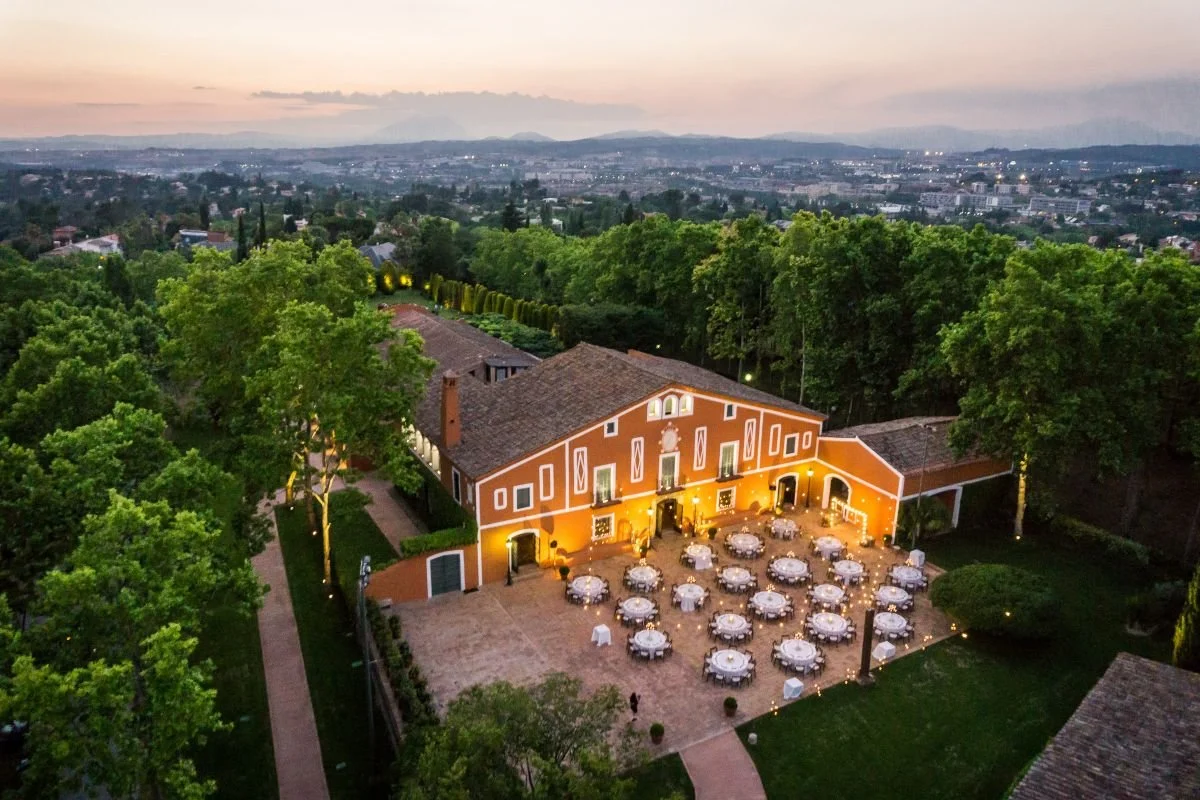
The European Sushi Championship in Sant Cugat
This year's championship took place at Masia Rosàs, a beautiful historic venue in Sant Cugat del Vallès, a town just outside Barcelona.
Sant Cugat provided a wonderful setting for the event, combining the atmosphere of a traditional Catalan estate with the energy and excitement of an international culinary competition.
The championship consisted of three distinct challenges, each designed to assess different aspects of a sushi chef's abilities.
The first was a technical preparation challenge, where competitors demonstrated their fish filleting, knife skills, ingredient preparation and workstation organisation.
The second was a tasting challenge, requiring twelve identical nigiri and twelve pieces of maki, with particular emphasis on flavour, balance and presentation.
Finally, the creative challenge required competitors to produce an elaborate sushi presentation, including nigiri, maki, decorative sushi and sashimi, within a strict time limit.
With an international panel of experienced judges assessing everything from technical precision to creativity and taste, there was little room for error.
My Approach: Connecting Scotland and Japan Through Food
For my entry, I wanted to create something that reflected both my Scottish heritage and my experiences working and training in Japan, particularly in Wakayama.
Rather than simply incorporating Scottish ingredients into Japanese dishes, I wanted to explore genuine connections between the two culinary cultures.
Scotland and Japan might seem very different at first glance, but both have strong traditions of seafood, an appreciation for exceptional ingredients and similar water softness, making fine quality Whisky possible.
I wanted those shared values to form the foundation of my presentation while giving a nod to both countries.
Wagyu and Aberdeen Angus: A Connection Between Two Beef Traditions
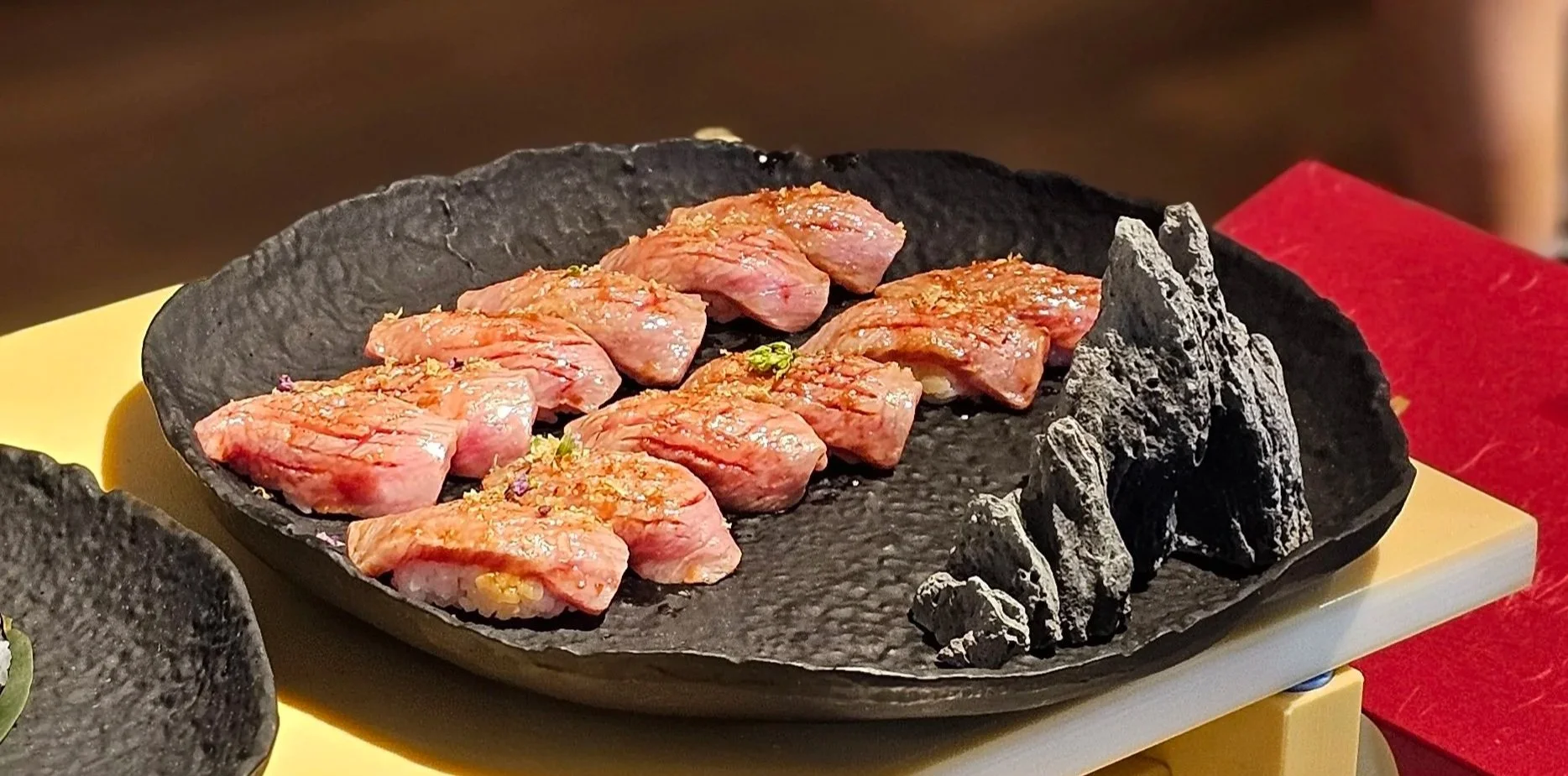
For the tasting challenge, I prepared twelve pieces of lightly seared Japanese wagyu nigiri, brushed with smoked soy sauce, freshly grated wasabi, cured egg yolk and delicate Japanese shiso flowers.
The inspiration came from the connection between two of the world's most celebrated beef traditions: Japanese wagyu and Scottish Aberdeen Angus. Many people think of Whisky when Japan and Scotland are in the same sentence, but beef is the true, deep connection!
Growing up in Aberdeenshire, Aberdeen Angus was naturally a familiar name, representing the country's long history of producing high-quality beef. The Aberdeen Angus was used to breed the Japanese Black Angus, that became known as Wagyu.
I wanted to express that connection through my sushi.
The wagyu was lightly seared to release its natural aroma and flavor from the fat, while the smoked soy and cured egg yolk provided added an additional Scottish touch, as we smoke many foods, without overpowering the beef.
The objective was balance: allowing the quality of the wagyu to remain the focus, supported by carefully chosen Japanese ingredients.
Fish and Chips, Reimagined as Japanese Sushi
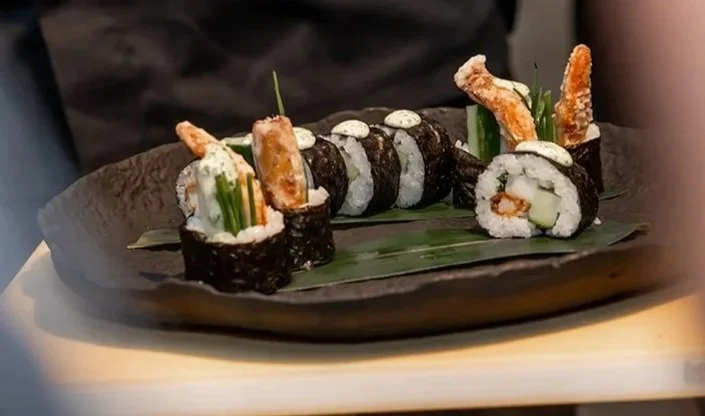
For the second part of the tasting challenge, I took inspiration from one of Britain's most recognisable dishes: fish and chips.
Rather than attempting a literal reproduction, I wanted to reinterpret its familiar flavours using traditional Japanese cooking techniques.
I chose red mullet, prepared using tatsuta-age, a Japanese technique in which fish is lightly marinated, coated in potato starch and fried to create a delicate, crisp exterior.
This formed the centre of my sushi roll, accompanied by cucumber, fresh herbs and a Japanese interpretation of tartare sauce.
The tartare incorporated aromatic ingredients such as parsley and myoga, giving it a distinctly Japanese character.
To recreate the sharpness traditionally associated with vinegar on fish and chips, I prepared vinegar-pickled daikon radish.
The result brought together several familiar elements: crispy fried fish, fresh herbs, creamy tartare and the acidity of vinegar, all expressed through the balance and structure of Japanese sushi.
It was a playful reference to my Scottish background, but one firmly grounded in Japanese culinary techniques.
The Creative Presentation: Inspired by Wakayama
For the final challenge, I wanted the presentation to reflect the Japanese culinary traditions that have influenced my career.
Wakayama holds particular significance for me, having spent time there developing my understanding of Japanese cuisine.
My approach to nigiri is influenced by the more generous style found in parts of the Kansai region, with substantial slices of fish carefully draped over the rice.
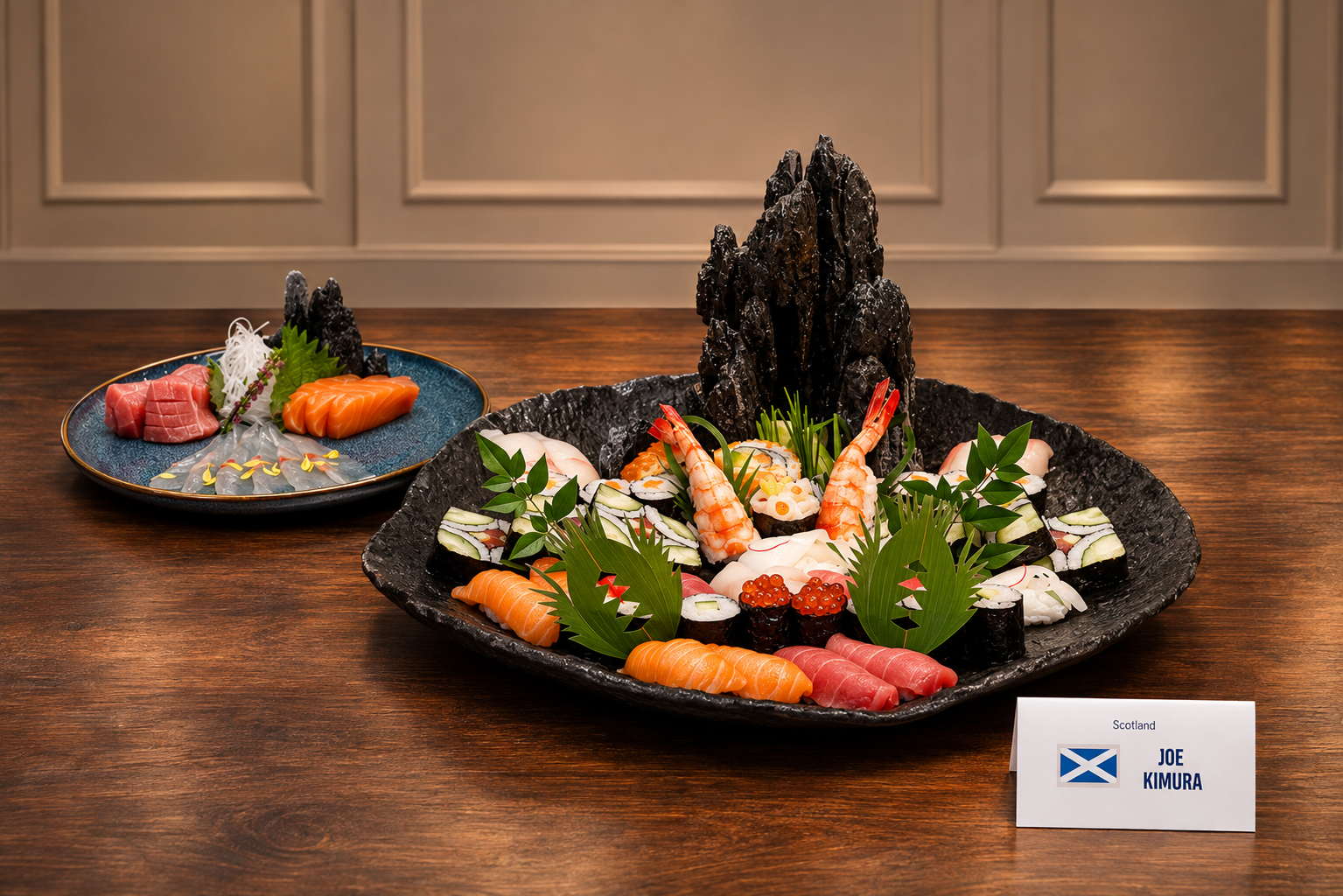
For the creative platter, I worked with a selection of seafood including salmon, tuna, sea bass, yellowtail, shrimp and cuttlefish, combining traditional nigiri with maki and more intricate decorative preparations.
The presentation itself was built around a dramatic dark rock formation, surrounded by sushi, Japanese greenery and carefully arranged garnishes.
I wanted to create the impression of a natural Japanese landscape, using the contrast between the dark stone, vibrant seafood and green leaves to give the arrangement depth and movement.
The decorative work also included subtle references to Scotland, bringing the two cultures together visually as well as through flavour.
Alongside the main presentation, I prepared a separate sashimi arrangement to demonstrate traditional Japanese cutting techniques.
The objective was to create something visually distinctive while remaining faithful to the principles of Japanese sushi: precision, restraint, balance and respect for the ingredients.
Competing Against Europe's Best
Competing at this level is always a challenge.
The time limits are demanding, the expectations are high, and every decision matters. From preparing the fish to shaping individual nigiri and arranging the final presentation, there is constant pressure to maintain precision while working efficiently.
I'm particularly pleased with how my tasting creations performed, scoring strongly among the competitors for flavour.
For me, that was an especially satisfying aspect of the competition. Presentation and creativity are important, but flavour has always been the foundation of my cooking.
I was also pleased to complete my creative presentation within the allotted time, bringing together a 50+ piece range of sushi preparations and decorative elements under competition conditions.
Although I didn't finish on the podium, I was proud of my performance and the work I presented.
Competing alongside chefs of this calibre is an achievement in itself, and doing well in such a demanding environment made the experience particularly rewarding.
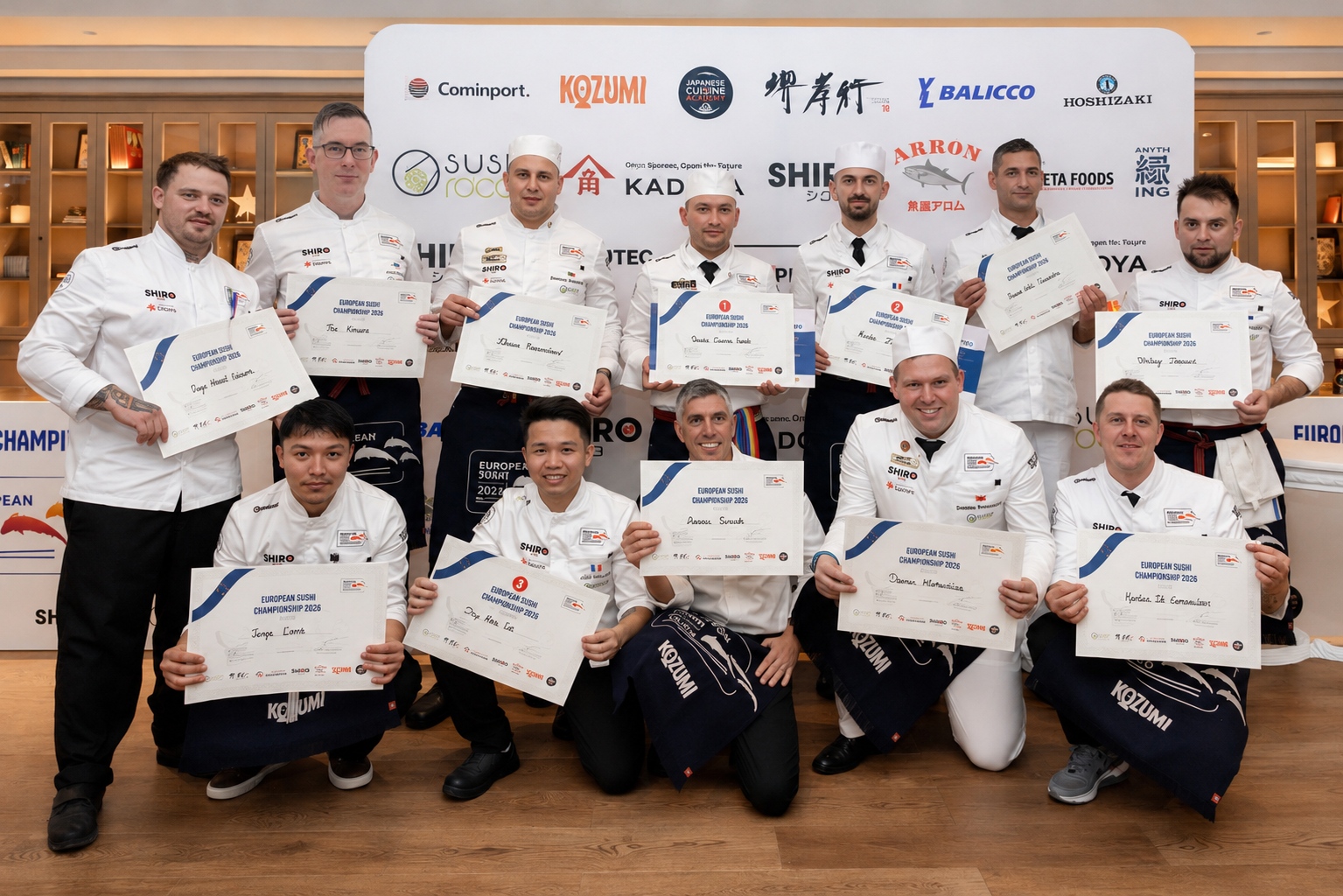
Beyond the competition, it was also a pleasure to meet other chefs who share the same passion for Japanese cuisine, exchange ideas and see the different interpretations and techniques being developed across Europe.
A Memorable Experience Representing Scotland
Representing Scotland at the European Sushi Championship was a genuine honour.
Japanese cuisine has taken me through many countries, kitchens and experiences throughout my career, but having the opportunity to bring my Scottish identity into an international sushi competition made this occasion especially meaningful.
I'm grateful to the organisers, judges, sponsors and fellow competitors for creating such an enjoyable and professionally organised event.
The championship was a reminder of why I enjoy culinary competitions: they challenge you to refine your skills, work outside your comfort zone and continue learning, regardless of how many years you've spent in professional kitchens.
I'm returning from Barcelona with some wonderful memories, new connections and plenty of inspiration for future projects.
Most importantly, I'm proud to have represented Scotland and to have shared my own interpretation of Japanese cuisine on the European stage.
Joe Kimura is a Scottish chef specialising in Japanese cuisine, with experience in leading international restaurants and professional training in Japan. He works as a private chef, culinary instructor and cookbook author, sharing his passion for traditional Japanese techniques and contemporary Japanese dining.
Discover more: JoeKimura.com